
Most pharmacies have policies and procedures. They're written, organized, and available when someone needs them.
But when was the last time anyone checked whether those policies reflect what actually happens during a normal workday?
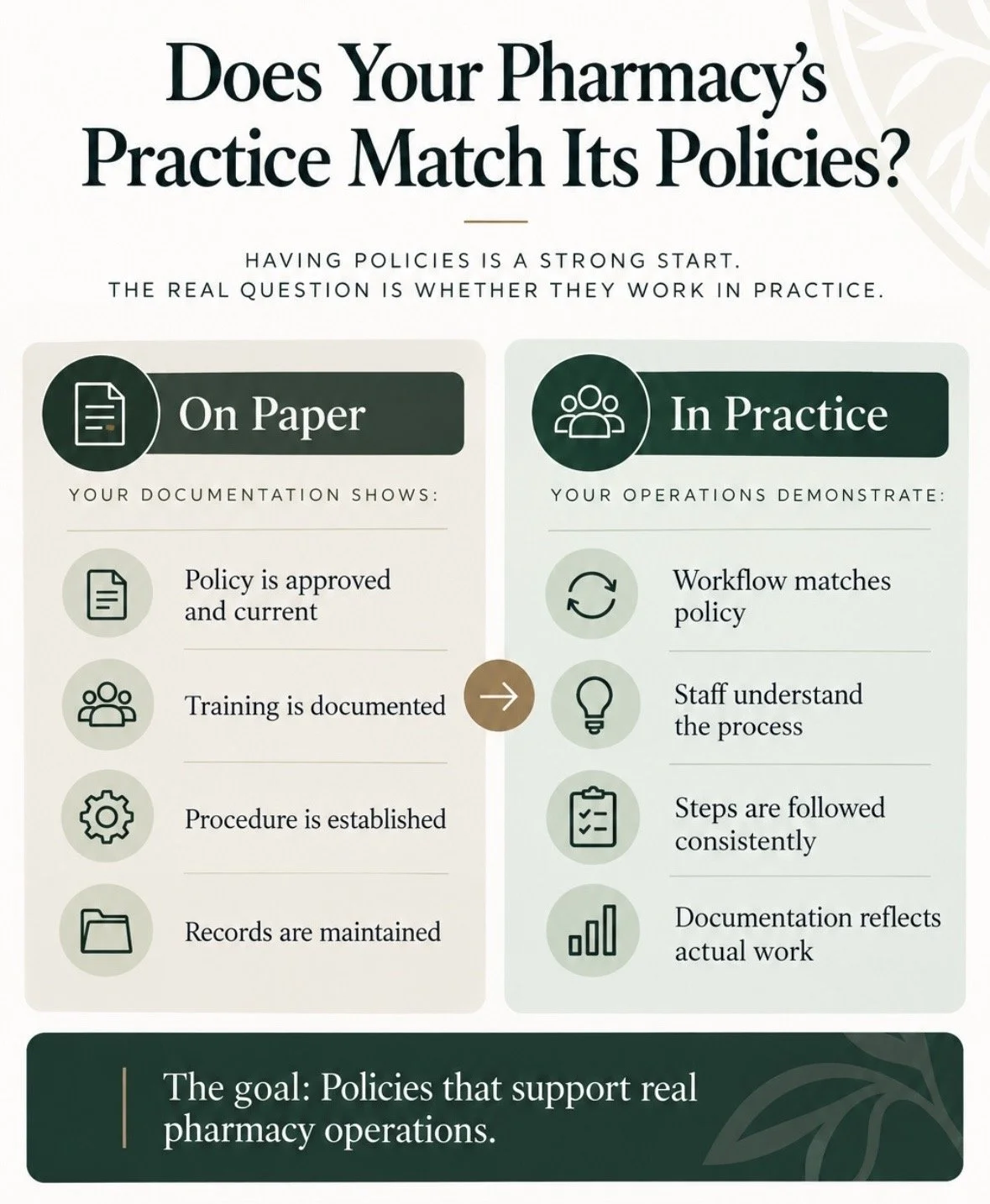
There's a difference between having policies in place and having a team that consistently follows them.
When Policies and Practice Don't Match
Pharmacy operations change. Staffing changes, technology gets updated, new services are introduced, and workflows evolve.
Unfortunately, policies don't always keep up.
Maybe a dispensing procedure references software the pharmacy no longer uses. Maybe responsibilities have shifted between employees, but the written procedures still reflect the old structure.
Or perhaps a policy describes a process that looks great on paper but simply isn't practical during a busy day.
These gaps aren't always intentional. Often, they're the result of years of small operational changes that were never reflected in the documentation.
Training Doesn't Stop at a Signature
Having employees sign an acknowledgment that they've reviewed a policy is important, but it doesn't necessarily demonstrate understanding.
Can employees explain the procedure? Do they know what to do when something goes wrong? Are they following the same process, or has everyone developed their own way of completing the task?
A policy is only useful if employees understand it and can realistically apply it.
What Would an Outside Reviewer See?
One of the most useful exercises a pharmacy can perform is to look at its operations through the eyes of someone unfamiliar with the business.
Follow a prescription from intake through dispensing and delivery. Observe how documentation is completed. Ask employees to explain their responsibilities.
Then compare what you see against the pharmacy's written procedures.
The goal isn't to catch employees doing something wrong. It's to identify where documentation, training, and actual practice have drifted apart.
These reviews can uncover opportunities to improve efficiency, reduce errors, and strengthen compliance before an accreditation survey or regulatory inspection.
Making Compliance Part of Daily Operations
Policies shouldn't exist solely to satisfy a licensing or accreditation requirement.
They should support the people doing the work.
That means reviewing procedures regularly, updating them when operations change, involving employees who actually perform the tasks, and confirming that the resulting processes work as intended.
Sometimes the solution is additional training. Sometimes it's a policy revision. And sometimes the workflow itself needs attention.
The goal isn't just to have policies that look good on paper. It's to have policies that make sense in practice.
Five Questions to Ask About Your Pharmacy's Policies
A quick internal review can reveal whether your policies still reflect daily operations.
When were your policies last reviewed? Have changes in staffing, technology, services, or regulatory requirements been addressed?
Do your written procedures match what employees actually do? Observe the workflow rather than relying solely on the documentation.
Can employees explain the procedures they're responsible for? A training acknowledgment doesn't necessarily demonstrate understanding.
Are exceptions and unexpected situations addressed? Staff should know how to respond when the normal process doesn't go according to plan.
Can you demonstrate compliance through documentation? Records should accurately reflect the work performed and support applicable regulatory and accreditation requirements.
If you're unsure about the answers, it may be time for a closer look.
The purpose of reviewing policies isn't to create more paperwork. It's to identify where expectations and daily practice may have drifted apart.
